How We Approach Urban Education
We believe informed citizenship requires understanding the systems that shape cities. Our approach combines structured learning, expert dialogue, and real-world case analysis to build urban literacy.
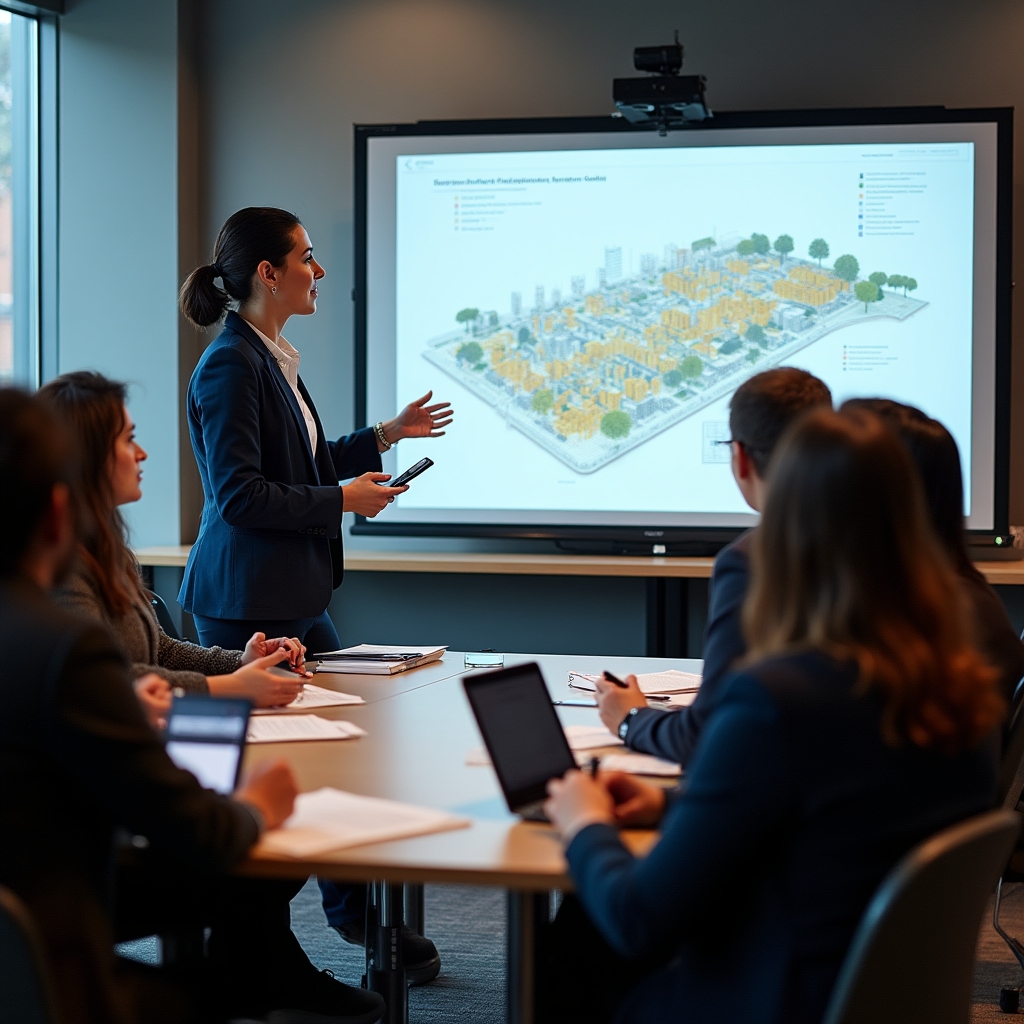
Structured Yet Exploratory
Each gathering follows a clear framework while remaining open to participant questions and tangential exploration. We balance structure with flexibility, ensuring substantive coverage without rigid constraints.
Topics are sequenced to build understanding progressively. Early sessions establish foundational concepts — zoning, density, infrastructure economics — that later discussions build upon when examining more complex phenomena like gentrification or transit-oriented development.
- Foundational concepts introduced before complex applications
- Each session stands alone while contributing to broader understanding
- Participant questions shape discussion direction
- Technical terms explained in accessible language
Expert Voices, Citizen Perspective
We bring urbanists, architects, and specialized journalists into conversation with engaged citizens. The goal is not expert lectures but collaborative exploration where professional knowledge meets lived experience.
Invited speakers are selected for their ability to communicate complex ideas clearly and their willingness to engage with non-specialist audiences. We value expertise that acknowledges uncertainty and complexity rather than offering simplistic answers.
- Practitioners with deep knowledge and clear communication skills
- Discussion format rather than one-way presentation
- Multiple perspectives on contested urban questions
- Space for disagreement and nuanced debate
Grounded in Real Cases
Abstract urban theory becomes meaningful when tied to specific places and actual decisions. We examine real development projects, policy changes, and neighborhood transformations happening in Argentine cities.
Case studies are selected to illustrate broader principles while remaining specific enough to be concrete. We look at before-and-after conditions, trace decision-making processes, and analyze measurable outcomes where data exists.
- Recent examples from Buenos Aires, Córdoba, Rosario, Mendoza
- Mix of large-scale infrastructure and small neighborhood changes
- Policy analysis showing how decisions translate to built outcomes
- Data visualization when quantitative evidence is available

Critical, Not Prescriptive
We aim to develop critical thinking about urban issues rather than advocating particular positions. Cities involve trade-offs, competing values, and legitimate disagreements. Our role is helping participants understand complexity, not simplifying it away.
This means acknowledging when evidence is uncertain, when experts disagree, and when value judgments rather than technical facts drive different conclusions. Urban literacy includes recognizing what we don't know and what can't be definitively resolved.
- Presenting multiple perspectives on contentious issues
- Distinguishing technical questions from value questions
- Acknowledging limitations of available evidence
- Encouraging participants to form their own informed views
What Guides Our Work
Education Over Advocacy
We focus on building understanding rather than promoting particular urban visions. Participants should leave with better tools for thinking about cities, not prescribed answers.
Complexity Over Simplification
Urban questions rarely have simple answers. We embrace complexity and trade-offs rather than reducing issues to false binaries or easy solutions.
Dialogue Over Lecture
Learning happens through conversation. We create space for questions, disagreement, and collaborative sense-making rather than one-directional information transfer.
Local Over Generic
Argentine cities have specific contexts, histories, and challenges. While we draw on international examples, our focus remains firmly on local urban realities.
Ready to Engage with Urban Questions?
If this approach resonates with you, we'd welcome your participation in upcoming gatherings. Reach out to learn more about our schedule and how to join.
Get in Touch