Urban Insights
Observations about urban development patterns, neighborhood transformation, and city change emerging from our discussions and case analyses.
Patterns We've Observed
Through examining numerous cases and discussing with experts, certain patterns in urban transformation become visible.

Timing Matters More Than Location
Infrastructure announcements often trigger property value changes before construction begins. The anticipation phase — between announcement and completion — can see more dramatic price movements than the post-completion period.
This suggests that market participants price in future accessibility improvements quickly, while actual usage patterns take longer to establish. Understanding announcement effects versus completion effects helps decode neighborhood transformation timing.
Regulatory Frameworks Create Path Dependencies
Once zoning establishes particular development patterns, subsequent changes face significant inertia. Existing built form, infrastructure investments, and property owner expectations create resistance to regulatory change.
This means early zoning decisions have long-lasting consequences. Neighborhoods zoned for low density decades ago resist densification even when transportation access would support it. Understanding these path dependencies helps explain why some areas remain frozen in earlier development patterns.
Commercial Follows Residential, Then Reinforces It
Neighborhood transformation typically begins with residential change — new residents moving in, property renovations, demographic shifts. Commercial development follows as businesses respond to changing customer base.
Once established, new commercial offerings reinforce residential transformation by making the neighborhood more attractive to similar demographics. This creates a feedback loop where residential and commercial change amplify each other.
Micro-Geography Creates Sharp Boundaries
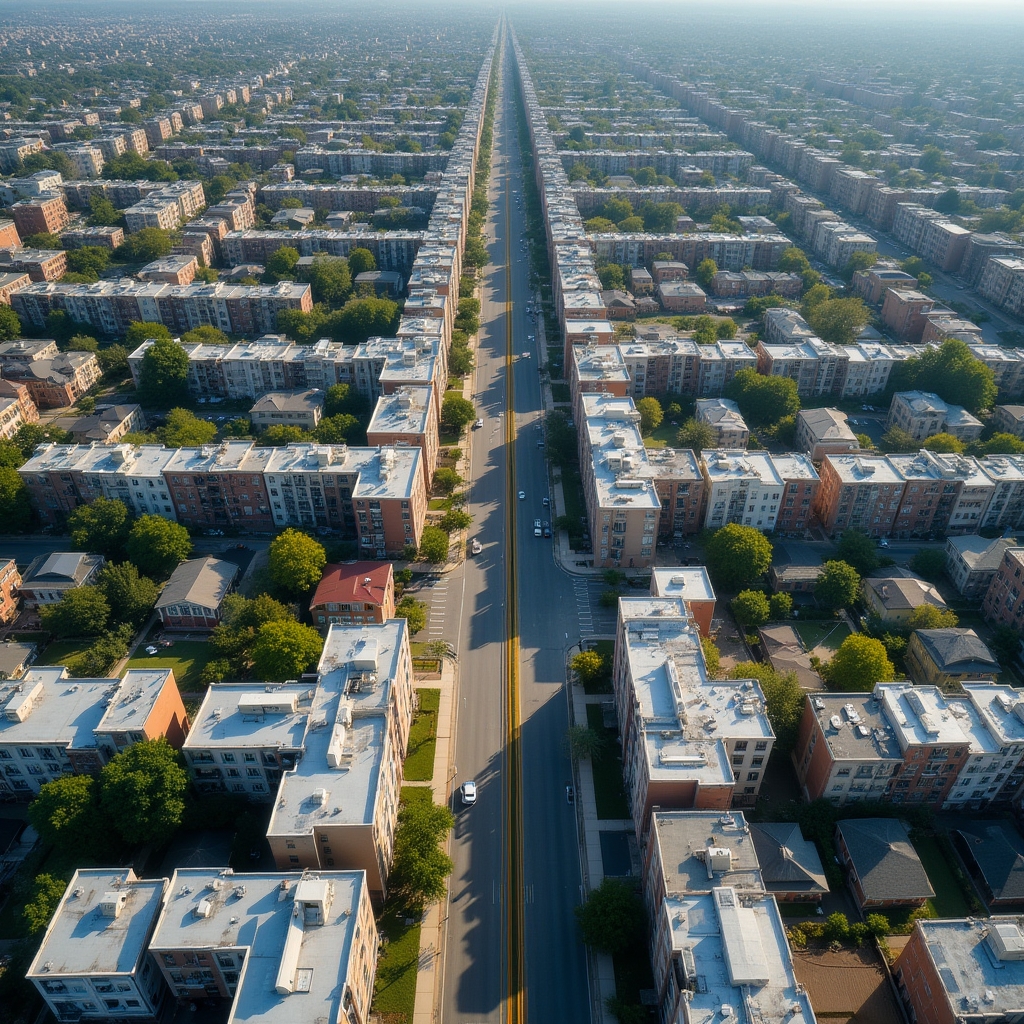
Urban change often exhibits surprising geographic precision. Transformation stops at specific streets or blocks rather than fading gradually. Physical barriers, historical boundaries, or perceived neighborhood edges create sharp transitions.
This micro-geographic variation means adjacent blocks can experience very different trajectories. Understanding these boundaries — both physical and perceptual — helps explain uneven development patterns within larger areas.
Lessons from Specific Cases
Transit Proximity Premiums Vary
Not all transit stations create equal value effects. Station-area premiums depend on service frequency, network connectivity, surrounding land uses, and existing neighborhood characteristics. Context matters as much as mere proximity.
Park Effects Are Hyperlocal
Property value premiums from park proximity decline steeply with distance. Effects are measurable within two to three blocks but diminish rapidly beyond that. Park size and amenities influence the extent of these effects.
Density Increases Are Contested
Proposals to increase allowable density consistently generate opposition from existing residents. This pattern holds across different neighborhood types and income levels, suggesting deep-seated preferences about neighborhood character.
Cultural Institutions Signal Change
The arrival of galleries, performance spaces, and cultural venues often precedes broader neighborhood transformation. These institutions both respond to and accelerate gentrification processes.
What We're Still Exploring
Some urban phenomena resist simple explanation. These questions continue to generate discussion.
Tipping Points
What triggers rapid neighborhood transformation after years of stability? Can tipping points be identified prospectively, or only recognized in retrospect?
Displacement Measurement
How can we measure displacement accurately? Residents who leave don't appear in subsequent neighborhood data, making their experiences difficult to track and quantify.
Policy Effectiveness
Which policies actually influence development patterns, and which are symbolic? Separating effective interventions from political theater remains challenging.
Long-Term Trajectories
Do gentrified neighborhoods remain gentrified indefinitely, or do they eventually decline again? What determines neighborhood trajectories over decades rather than years?
Join the Exploration
These insights emerge from ongoing discussion and case analysis. If these questions interest you, consider participating in our gatherings.
Get in Touch